Small Business Website Checklist: 15 Must-Haves for 2026
The definitive small business website checklist for 2026 covering design, performance, SEO, security, and conversion essentials every site needs.

A successful small business website in 2026 needs to do more than look professional. It must load fast, rank in search engines, convert visitors into leads, meet accessibility standards, and work flawlessly on every device. This checklist covers the 15 essential elements your website needs to deliver real business results, with practical guidance on what each item means and how to implement it.
Whether you are building a new website or auditing an existing one, work through this checklist item by item. Every element included here directly impacts either your visibility in search results, your ability to convert visitors, or the trust and credibility your website conveys.
1. Mobile-responsive design
More than 60% of web traffic now comes from mobile devices. Google uses mobile-first indexing, meaning it primarily evaluates the mobile version of your website when determining search rankings. A website that does not work well on phones and tablets is invisible to the majority of your potential customers.
What this means in practice:
- Your layout should adapt fluidly to any screen size without horizontal scrolling
- Navigation should collapse into a hamburger menu or similar mobile-friendly pattern
- Touch targets (buttons, links) should be at least 44x44 pixels
- Text should be readable without pinching or zooming (minimum 16px base font size)
- Forms should be easy to fill out on a phone with appropriately sized input fields
Test your site on multiple real devices, not just browser resizing. Chrome DevTools and BrowserStack are useful, but nothing replaces testing on actual phones.
2. Fast load times (under 3 seconds)
53% of mobile users abandon a site that takes longer than 3 seconds to load. Google's Core Web Vitals — Largest Contentful Paint (LCP), Interaction to Next Paint (INP), and Cumulative Layout Shift (CLS) — are confirmed ranking factors. Speed is not optional.
How to achieve fast load times:
- Compress and serve images in modern formats (WebP or AVIF)
- Minimize CSS and JavaScript files
- Use a Content Delivery Network (CDN) to serve assets from nearby servers
- Enable browser caching for returning visitors
- Choose quality hosting — shared hosting with a $5/month plan is not sufficient for business-critical websites
- Lazy-load images and videos below the fold
- Eliminate render-blocking resources
Run your site through Google PageSpeed Insights and aim for scores of 90 or above on both mobile and desktop. The investment in performance directly translates to lower bounce rates and higher conversions.
3. SSL certificate (HTTPS)
An SSL certificate encrypts the connection between your website and your visitors' browsers. Google has used HTTPS as a ranking signal since 2014, and modern browsers display "Not Secure" warnings for sites without it. For any site that collects information — even a simple contact form — SSL is a legal and ethical requirement.
Implementation:
- Most hosting providers offer free SSL through Let's Encrypt
- Ensure all pages load over HTTPS, not just your checkout or contact pages
- Set up 301 redirects from HTTP to HTTPS versions of all pages
- Update internal links, canonical tags, and sitemap URLs to use HTTPS
- Renew your certificate before it expires (automate this if possible)
This is table stakes in 2026. There is no reason for any business website to run without SSL.
4. Clear calls to action (CTAs)
Your website exists to drive a specific business outcome — a phone call, a form submission, a booking, a purchase. Every page should make it unmistakably clear what action you want the visitor to take next.
CTA best practices:
- Place a primary CTA above the fold on your homepage
- Use action-oriented language: "Get a Free Quote," "Book Your Consultation," "Start Your Project"
- Make CTA buttons visually distinct with contrasting colors
- Repeat your CTA at logical points throughout long pages (after key sections, at the bottom)
- Limit each page to one primary CTA and one secondary CTA — too many choices creates paralysis
- Test different CTA text, colors, and placements to see what converts best
If you are unsure whether your CTAs are working, check your analytics for conversion rates by page. Our web design services include conversion-optimized layouts built around clear user journeys.
5. Contact information on every page
Your phone number, email address, and physical address (if applicable) should be accessible from every page of your website. The most common placement is in the header and footer. For Toronto businesses, a local phone number with a 416 or 647 area code builds immediate trust with local customers.
What to include:
- Phone number (clickable on mobile with a tel: link)
- Email address
- Physical address (for local businesses)
- Business hours
- A link to your contact page or booking system
- A link to your Google Maps listing
Do not make people hunt for how to reach you. Every additional click between a potential customer and your contact information is a chance for them to leave and call a competitor instead.
6. Google Business Profile integration
Your website and your Google Business Profile should work together. Link your GBP to your website, embed a Google Map on your contact page, and ensure your business information matches exactly between the two. This consistency is a foundational element of local SEO.
Integration checklist:
- Embed a Google Map on your contact page showing your business location
- Match your NAP (name, address, phone) exactly between your website and GBP
- Add a "Leave Us a Review" link that goes directly to your Google review page
- Display your Google star rating on your website using a reviews widget
- If you post regularly on GBP, cross-reference that content on your website
For a deeper dive into Google Business Profile optimization, read our Complete Guide to Local SEO for Toronto Small Businesses.
7. Schema markup (structured data)
Schema markup is code you add to your website that helps search engines understand your content in a structured way. It enables rich results in search — star ratings, business hours, FAQ dropdowns, event details, and more. These enhanced listings earn higher click-through rates than plain blue links.
Essential schema types for small businesses:
- LocalBusiness: Your business name, address, phone, hours, geo-coordinates
- Organization: Logo, social profiles, contact information
- BreadcrumbList: Helps search engines understand your site structure
- FAQ: Enables FAQ rich results on pages with question-and-answer content
- Service: Details about specific services you offer
- Review/AggregateRating: Displays star ratings in search results
Implement schema as JSON-LD in your page's head section. Test your implementation with Google's Rich Results Test tool. Schema markup does not guarantee rich results, but without it, you have zero chance of earning them.
8. Accessible design (WCAG compliance)
Web accessibility means your website can be used by people with disabilities, including visual, auditory, motor, and cognitive impairments. In Ontario, the Accessibility for Ontarians with Disabilities Act (AODA) requires businesses with 50 or more employees to have WCAG 2.0 Level AA compliant websites. Even if you are below that threshold, accessible design reaches more customers and reduces legal risk.
Key accessibility requirements:
- All images must have descriptive alt text
- Color contrast ratios must meet WCAG AA minimums (4.5:1 for normal text)
- All functionality must be accessible via keyboard navigation
- Forms must have properly associated labels
- Videos must have captions or transcripts
- Headings must follow a logical hierarchy (H1, H2, H3 — no skipping levels)
- Links must have descriptive text (not "click here")
- Your site must work with screen readers
Run your site through the WAVE accessibility checker and fix any errors. Accessibility is not a checkbox you check once — it is an ongoing practice that should be part of your development workflow.
9. Analytics tracking
If you are not measuring what happens on your website, you are making decisions based on guesswork. Google Analytics 4 (GA4) is the standard for website analytics and it is free.
What to set up:
- Google Analytics 4 with your measurement ID
- Google Search Console for search performance data
- Conversion events for every important action (form submissions, phone calls, downloads, purchases)
- UTM parameters for all marketing campaigns so you know which channels drive results
- Custom dashboards or reports for the metrics that matter most to your business
Beyond basic page view tracking, set up event tracking for button clicks, scroll depth, video plays, and file downloads. The data you collect in the first few months of tracking becomes the baseline you use to measure the impact of every future improvement.
10. Social proof and testimonials
92% of consumers read online reviews before making a purchase. Social proof on your website — testimonials, case studies, client logos, star ratings, and review excerpts — reduces perceived risk and builds trust with potential customers.
Effective social proof strategies:
- Feature 3 to 5 strong testimonials on your homepage
- Include the client's name, title, company, and photo when possible (with permission)
- Create dedicated case study pages showing specific results
- Display aggregate review scores from Google or industry platforms
- Add client logos for recognizable brands you have worked with
- Include specifics: "increased our leads by 40%" is more persuasive than "great service"
Rotate testimonials periodically and gather new ones proactively. If you are a newer business with fewer testimonials, even 2 or 3 genuine, specific quotes are better than none.
11. Blog or content hub
A blog or resource section gives your website a mechanism for ranking for informational search queries, demonstrating expertise, and keeping your site fresh. Businesses that blog regularly generate 67% more leads than those that do not.
Content hub essentials:
- Organize content by topic or service area, not just chronologically
- Publish at minimum twice per month (consistency matters more than volume)
- Optimize every post for a specific keyword with proper title tags, meta descriptions, headers, and internal links
- Include clear CTAs within blog posts to move readers toward conversion
- Create a mix of content types: how-to guides, industry insights, local market analysis, and FAQ-style posts
Your content hub is where content marketing and SEO come together. Every useful, well-optimized article is a new entry point for potential customers to discover your business through search.
12. Service pages optimized for SEO
Your service pages are among the most important pages on your website for driving revenue. Each service you offer should have its own dedicated page — not a single page listing everything. Individual service pages allow you to target specific keywords, provide detailed information, and rank for the searches that matter most.
What each service page needs:
- A unique, keyword-rich title tag and meta description
- An H1 heading that clearly states the service
- Detailed description of what the service includes
- Who it is for and what problems it solves
- Your process or approach
- Pricing or pricing guidance (if applicable)
- Relevant testimonials or case studies
- A strong CTA to get in touch or learn more
- Internal links to related services and resources
Do not write thin, 200-word service pages. Aim for at least 800 to 1,200 words of genuinely useful content per service page. Search engines reward depth and comprehensiveness.
13. Privacy policy and terms of service
Every business website needs a privacy policy, especially if you collect any user data — and you almost certainly do, even if it is just through analytics tracking or a contact form. In Canada, the Personal Information Protection and Electronic Documents Act (PIPEDA) requires businesses to disclose what personal information they collect and how they use it.
What your privacy policy should cover:
- What personal information you collect (names, emails, phone numbers, cookies, analytics data)
- How you collect it (forms, cookies, tracking pixels)
- Why you collect it (to provide services, communicate, improve your website)
- How you store and protect it
- Whether you share it with third parties
- How users can request access to or deletion of their data
- Your contact information for privacy inquiries
Your terms of service should outline the rules for using your website, liability limitations, intellectual property rights, and dispute resolution. Both documents should be linked in your website footer and easily accessible from any page.
14. Local SEO elements
For Toronto businesses, local SEO elements on your website reinforce your geographic relevance and support your Google Business Profile optimization.
On-site local SEO elements:
- Your full NAP (name, address, phone) in your website footer using LocalBusiness schema
- An embedded Google Map on your contact page
- Location-specific content on your homepage and service pages (mention Toronto, GTA neighborhoods you serve)
- Location pages for each area you serve if you cover multiple neighborhoods or cities
- Toronto-specific testimonials and case studies
- Local phone number (not a 1-800 number) as your primary contact
These elements work together with your off-site local SEO (citations, reviews, GBP) to send consistent location signals to search engines. For a comprehensive approach, explore our SEO services.
15. Conversion tracking
Having a beautiful, fast, well-optimized website is meaningless if you cannot measure whether it is generating business results. Conversion tracking connects your website activity to actual revenue-generating actions.
Essential conversions to track:
- Contact form submissions
- Phone calls (using call tracking or Google Ads call extensions)
- Email link clicks
- Live chat conversations
- Booking or scheduling actions
- Quote requests
- Newsletter signups
- Purchases (for e-commerce)
Set these up as conversion events in Google Analytics 4. If you run paid advertising, import these conversions into Google Ads or Meta Ads so the algorithms can optimize toward real business outcomes. Review your conversion data monthly and use it to identify which pages, traffic sources, and campaigns actually drive results.
Without conversion tracking, you are investing in a website and digital marketing without knowing what is working. It is the equivalent of running a store without a cash register.
Key takeaways
- Mobile responsiveness and fast load times are the non-negotiable foundation of any business website in 2026. If your site is slow or broken on phones, nothing else matters.
- SSL, accessibility compliance, and privacy policies are legal and ethical requirements, not optional extras.
- Every page needs a clear call to action and easily accessible contact information. Do not make potential customers work to reach you.
- Schema markup, optimized service pages, and a content hub are what allow your website to rank and attract organic traffic.
- Social proof builds trust and directly increases conversion rates. Feature testimonials, reviews, and case studies prominently.
- Conversion tracking closes the loop between your website investment and actual business results. Set it up from day one.
Frequently asked questions
How much does a small business website cost in Toronto?
A professionally built small business website in Toronto typically costs between $3,000 and $15,000 for a custom design, depending on complexity, number of pages, and functionality required. Template-based solutions can start lower, while e-commerce sites and complex web applications can cost significantly more. At Fieldgates, our subscription model includes website design and ongoing optimization as part of your monthly plan — view our plans for details.
How often should I update my small business website?
Your website should be a living asset, not a set-it-and-forget-it project. At minimum, review and update your content quarterly. Publish new blog posts at least twice a month. Update your portfolio, testimonials, and team information as they change. Run a technical audit every six months to catch performance issues, broken links, and security vulnerabilities. Google favors websites that demonstrate consistent freshness and maintenance.
Do I really need a blog on my small business website?
Yes. A blog or content hub is one of the most effective ways to attract organic search traffic, demonstrate expertise, and nurture potential customers through the buying process. You do not need to publish daily — even two high-quality posts per month can make a significant difference. The key is consistency and quality. Focus on answering the questions your potential customers are actually searching for. Our content marketing services can help you build a sustainable publishing strategy.
What is the most important page on a small business website?
Your homepage is typically the most visited page and often the first impression, but your service pages are usually the most important for driving revenue. Service pages are where search intent aligns most closely with buying intent. A well-optimized service page that clearly explains what you offer, who it is for, and why someone should choose you will generate more leads than any other page type. Invest the most effort in your homepage and your core service pages. Book a free consultation if you want a professional assessment of your current website.
How do I know if my website is performing well?
Track these five metrics monthly: organic traffic from Google Search Console, conversion rate from Google Analytics, Core Web Vitals scores from PageSpeed Insights, keyword rankings for your target terms, and the number of leads or sales generated. If organic traffic is growing, conversions are increasing, and your site meets Core Web Vitals thresholds, your website is performing well. If any of these metrics are flat or declining, it is time to investigate and make improvements.
More Web Design resources
View all resources
7 UX Design Principles That Turn Visitors Into Customers
The essential user experience design principles every business website needs to convert traffic into leads and sales.
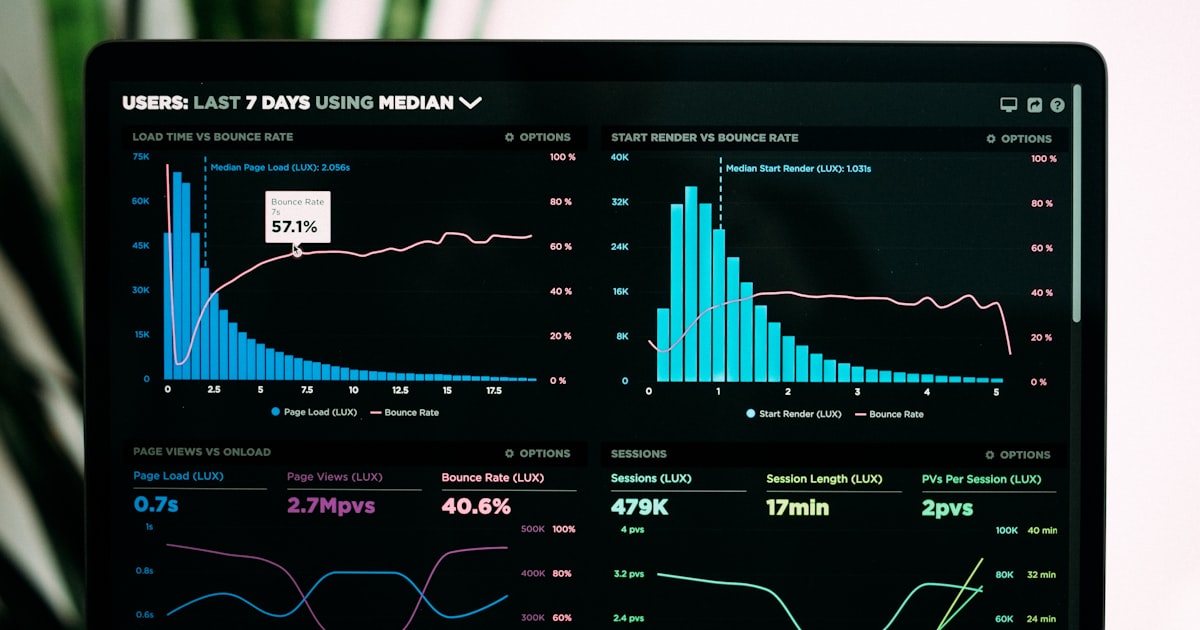
Website Speed Optimization: Why Your Site Is Slow and How to Fix It
A practical guide to diagnosing and fixing website performance issues that hurt your search rankings and conversion rates.

Restaurant Website Design in Toronto: What Actually Converts in 2026
What Toronto restaurants need from their website to convert visitors into diners. Online ordering, reservations, mobile design, and common mistakes to avoid.
Grow your business with Web Design
Ready to put these web design strategies into action? Let Fieldgates handle it for you.